

Blog
Start Your Jewelry Business Now : It Is Never Late
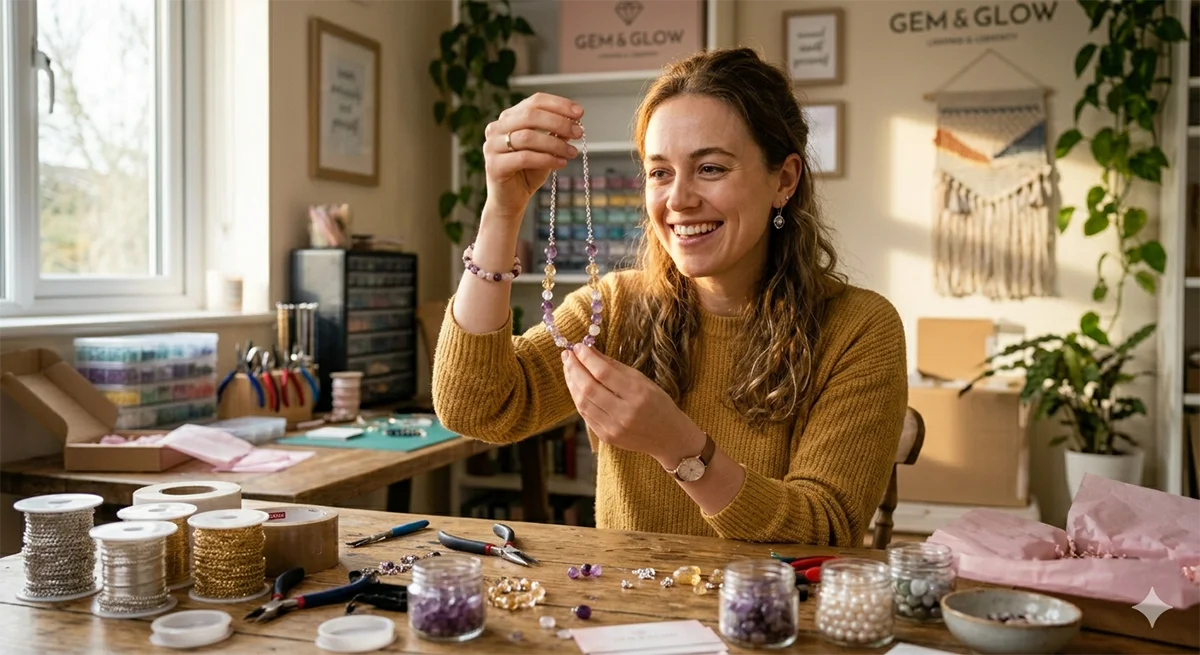
The Timeless Sparkle: Why It Is Never Too Late to Start Creating and Selling Jewelry Online for Extra Income
Have you ever held a piece of handmade jewelry in your hands and marveled at the intricate details, wondering about the story behind its creation? Perhaps you have strung a few beads together for a friend, or maybe you have spent hours sketching beautiful designs in a notebook, only to close the cover with a sigh, thinking, “I should have done this years ago.” If you are reading this right now, it is time to banish that thought forever. There is a pervasive, yet entirely false, narrative in the world of entrepreneurship that success belongs solely to the young, or to those who started a decade ago. We look at massive online marketplaces and fear that the digital shelves are simply too crowded. But here is the most beautiful truth about art, creativity, and business: it is absolutely never too late to start creating and selling jewelry online for extra income. Creativity has no expiration date. Your life experiences, your unique perspective, and your individual aesthetic are assets that take years to cultivate. A side hustle in jewelry making is not just a wonderful way to generate additional income; it is a profound journey of self-expression, mindfulness, and empowerment. Whether you are seeking a creative outlet after retirement, looking to supplement your full-time income, or simply wanting to turn a lifelong passion into a profitable endeavor, the digital world is waiting for your unique sparkle. In this comprehensive guide, we will walk together through the uplifting and highly rewarding process of launching your online jewelry business. From discovering your unique style to mastering the art of pricing, let us explore why right now is the perfect time to begin.Focus Point 1: Shattering the Myth of “Too Late” and “Too Crowded”
The first hurdle to overcome is rarely technical; it is almost always mental. When contemplating starting an online jewelry business, the inner critic often whispers two things: “I am too old to learn this,” and “The market is already oversaturated.” Let us gently, but firmly, dismantle these myths. First, consider the nature of jewelry itself. Jewelry is not a passing technological fad; it is one of the oldest forms of human expression. People have been adorning themselves for thousands of years to signify love, status, spirituality, and personal style. Because jewelry is so deeply personal, there is no such thing as a “monopoly” on design. A customer might own fifty necklaces, but they will still buy a fifty-first if it speaks to their heart. They are not just buying metal and stone; they are buying your vision, your story, and the care you put into crafting it. Secondly, the concept of being “too late” to the digital marketplace ignores the reality of how the internet continues to expand. Online shopping is no longer a novelty; it is the default way the world operates. More consumers are specifically seeking out handmade, artisanal, and slow-fashion items over mass-produced goods. They want a connection with the maker. Your age and your late start are actually your greatest advantages. You have lived. You have seen trends come and go. You possess a maturity, a work ethic, and a depth of character that will shine through in your customer service and your brand storytelling. Starting later means you are likely starting with a clearer sense of who you are, which translates into a stronger, more authentic brand.Focus Point 2: Discovering Your Unique Jewelry Niche
The most successful online jewelry businesses do not try to appeal to everyone. If you try to make everything from heavy, gothic silver rings to delicate, brightly colored beaded bracelets, your online store will look confused, and your ideal customer will not know what you stand for. The key to standing out is finding your specific niche. Your niche is the sweet spot between what you love to make, what you are capable of making with your current resources, and what a specific group of people wants to buy. Ask yourself the following questions to help unearth your niche:- What materials am I drawn to naturally? Do you love the earthy feel of raw crystals and leather, the sleek shine of sterling silver, or the vibrant versatility of polymer clay?
- What is my personal style? Are you minimalist, bohemian, classic, edgy, or romantic? Your best creations will usually reflect your personal taste.
- What is my current skill level? While you can always learn metalsmithing, you might want to start with wire-wrapping or bead-weaving to generate income quickly while you learn more complex skills.
- Who is my dream customer? Are you designing for brides, for busy professionals looking for everyday wear, or for teenagers who love trendy, colorful pieces?
Focus Point 3: The Artisan’s Arsenal – Sourcing Materials and Tools
Once you have an idea of your niche, it is time to gather your materials. One of the most beautiful aspects of starting a jewelry business for extra income is that the barrier to entry can be incredibly low. You do not need a twenty-thousand-dollar studio to begin. You simply need the right tools for your specific craft. When sourcing materials, it is vital to understand the difference in quality, as this will directly affect your pricing and your customer satisfaction. For example, knowing the difference between gold-plated (a very thin layer of gold over a base metal, prone to tarnishing), gold-filled (a much thicker layer of gold bonded to a base metal, highly durable), and solid gold is essential for accurate product descriptions. Below is an informative table outlining some of the most popular beginner-friendly jewelry making niches, along with the essential tools and estimated initial startup costs.Table 1: Popular Jewelry Niches and Essential Startup Requirements
| Jewelry Niche | Essential Tools Needed | Core Materials | Estimated Startup Cost | Learning Curve |
|---|---|---|---|---|
| Beading & Stringing | Wire cutters, round-nose pliers, chain-nose pliers, crimping tool, bead mat. | Glass/gemstone beads, beading wire, crimp tubes, clasps, jump rings. | Low ($50 – $100) | Very Beginner Friendly |
| Wire Wrapping | Flush cutters, flat-nose pliers, nylon jaw pliers (to prevent wire scratching), ring mandrel. | Copper, silver, or gold-filled wire in various gauges, cabochons, raw crystals. | Low to Medium ($75 – $150) | Moderate (Requires practice for neatness) |
| Polymer Clay | Acrylic rolling pin, tissue blades, clay cutters (cookie cutters), sandpaper, dedicated toaster oven. | Blocks of polymer clay, jump rings, earring posts, superglue, clear glaze. | Low ($50 – $120) | Beginner Friendly |
| Resin Jewelry | Silicone molds, mixing cups, stirring sticks, protective mask, gloves, UV light (if using UV resin). | Epoxy or UV resin, dried flowers, glitter, bezels, necklace chains. | Medium ($100 – $200) | Moderate (Requires safety precautions and patience) |
| Basic Metalsmithing / Stamping | Steel bench block, stamping hammer, letter/design stamps, metal hole punch, polishing pads. | Metal blanks (aluminum, copper, brass, silver), stamping enamel, jump rings, chains. | Medium to High ($150 – $300) | Steeper (Requires learning technique and tool handling) |
Focus Point 4: Crafting Your Creative Sanctuary
Creating beautiful things requires a space that allows your mind to focus and your hands to work freely. You do not need a separate room to have a functioning jewelry studio. A corner of your bedroom, a sturdy desk in the living room, or even half of the dining room table can serve as your creative sanctuary. What matters most is how you set up the space you have. 1. Ergonomics are Essential: Jewelry making involves tiny movements and intense focus, which can strain your neck, back, and eyes. Invest in a comfortable, adjustable chair. Ensure your work surface is at a height where you do not have to hunch over drastically. 2. Let There Be Light: Good lighting is not a luxury; it is a necessity. Natural daylight is always best, so setting up near a window is ideal. However, since you are likely doing this for extra income, you might be working in the evenings after a day job. Invest in a high-quality, adjustable LED desk lamp, preferably one with a magnifying glass attached if you are doing intricate wirework or bead weaving. 3. The Art of Organization: Jewelry supplies are notoriously small and easy to lose. A spilled box of seed beads is a rite of passage, but it is one you want to avoid! Utilize clear tackle boxes, small drawer organizers, or even clean baby food jars to separate your jump rings, clasps, beads, and wire. When your materials are organized, your mind is organized, allowing the creative process to flow without the frustration of searching for a missing clasp. 4. Set the Atmosphere: Make this space a place you genuinely want to be. Play uplifting music, light a mildly scented candle, or keep a small potted plant on your desk. This side hustle should feel like a retreat, not a chore.Focus Point 5: The Art and Science of Pricing Your Masterpieces
Perhaps the most common pitfall for new jewelry makers—especially those starting later in life who might view their work merely as a “hobby”—is drastically underpricing their creations. When you underprice your jewelry, you not only hurt your own potential for extra income, but you also unintentionally devalue the handmade market as a whole. Pricing is both a science (a mathematical formula) and an art (understanding perceived value). You must account for the cost of materials, your labor, your overhead (packaging, platform fees), and your profit margin. If you only charge for materials, you are essentially paying your customers to wear your jewelry! Here is a standard, foolproof formula used by successful artisans worldwide to ensure profitability.Table 2: The Professional Jewelry Pricing Formula
| Step | Description | Example Calculation (Wire-Wrapped Amethyst Necklace) |
|---|---|---|
| 1. Calculate Material Costs | The exact cost of every component used in the piece (wire, stone, chain, clasp, jump rings). Do not guess; measure exactly. | Amethyst stone: $4.00 Silver-filled wire: $2.50 Chain & Clasp: $3.50 Total Materials: $10.00 |
| 2. Calculate Labor Costs | Pay yourself an hourly wage. Do not pay yourself minimum wage! You are an artisan. Decide on an hourly rate (e.g., $20/hour) and divide it by how long the piece took. | Time to make: 45 minutes (0.75 hours) Hourly wage: $20.00 Total Labor: $15.00 ($20 x 0.75) |
| 3. Calculate Overhead/Packaging | The cost of the jewelry box, tissue paper, mailer, and a fraction of your tool wear-and-tear. | Box & Mailer: $2.00 Platform fees estimate: $1.00 Total Overhead: $3.00 |
| 4. Determine Base Cost | Add Materials + Labor + Overhead together. This is your break-even point. | $10.00 + $15.00 + $3.00 = Base Cost: $28.00 |
| 5. Calculate Wholesale Price | Multiply the Base Cost by 2. This ensures you make a profit to reinvest in your business even if you sell to a boutique at wholesale rates. | $28.00 x 2 = Wholesale Price: $56.00 |
| 6. Calculate Retail Price | Multiply the Wholesale Price by 2 (or 1.5 to 2.5 depending on your market). This is the price you list online. | $56.00 x 2 = Final Retail Price: $112.00 |
Focus Point 6: Building Your Digital Boutique
With your jewelry crafted and properly priced, it is time to open your doors to the world. Setting up an online store has never been more user-friendly. You do not need to know how to write computer code or hire an expensive web developer. There are generally two paths you can take: joining an established online artisan marketplace or building your own standalone e-commerce website. A marketplace comes with a built-in audience of shoppers specifically looking for handmade goods, making it easier to get your first sales. A standalone website gives you complete control over your branding and eliminates competitor listings, but it requires you to drive 100% of your own traffic. Many successful jewelers start on a marketplace and eventually open their own website as their brand grows. Whichever route you choose, the success of your digital boutique relies heavily on two crucial elements: The Magic of Photography Because your customers cannot pick up your jewelry, feel its weight, or try it on, your photographs must do all the heavy lifting. Bad photography will ruin the chances of selling even the most exquisitely crafted necklace. You do not need an expensive camera; a modern smartphone is more than capable. Here are the golden rules of jewelry photography:- Embrace Natural Light: Turn off your indoor yellow lights and set up near a window on a bright, overcast day. Direct sunlight creates harsh shadows; indirect, diffused light makes metals and stones glow.
- Keep it Clean: Use plain, uncluttered backgrounds. A simple sheet of white poster board or a piece of textured linen works beautifully. You want the jewelry to be the undeniable star of the photo.
- Show Scale and Context: Always include a lifestyle shot. Show the earrings worn by a model (or yourself!), or place a ring next to a familiar object. Customers need to know how big the piece is in real life.
- Capture the Details: Take macro (close-up) shots of the clasps, the texture of the metal, and the facets of the stones. This builds trust in the quality of your work.
Focus Point 7: Marketing Your Creations with Joy and Authenticity
The word “marketing” often makes creative people cringe. We picture aggressive sales pitches and pushy tactics. But when you are selling handmade jewelry, marketing is simply the act of sharing your joy and your process with people who will appreciate it. It is about connection, not manipulation. Social media is the most powerful, cost-effective tool for generating extra income through your jewelry business. Platforms that focus on visual content are your best friends. Share the Behind-the-Scenes People are deeply fascinated by how things are made. Do not just post pictures of the finished product. Post a short video of your hands wrapping wire. Post a photo of your messy desk covered in beads with a caption about your creative chaos. Share the story of a piece that went wrong and how you fixed it. When customers see the human being behind the jewelry, they become emotionally invested in your success. They stop being just consumers and become your community. Consistency Over Virality You do not need to go “viral” to build a successful side income. You need consistency. Decide on a schedule you can maintain without burning out—whether that is posting three times a week or once a day—and stick to it. Show up authentically. The Power of Email From the very beginning, start collecting email addresses from your customers and interested followers. Social media algorithms change constantly, and your posts might not always be seen. An email list is a direct line to the people who love your work. Send out a short, beautiful newsletter once a month sharing your newest designs, a little story from your studio, or a special discount for your subscribers.Focus Point 8: The Unboxing Experience – Turning Buyers into Loyal Fans
In the world of online retail, the moment of delivery is your physical storefront. When a customer receives a package from a massive corporate retailer, it comes in a brown box with plastic bubble wrap—functional, but entirely soulless. As a handmade artisan, you have the magnificent opportunity to create an “unboxing experience.” When a customer opens your package, they should feel like they are receiving a gift from a dear friend. This attention to detail transforms a one-time buyer into a lifelong, repeat customer who will passionately recommend you to their friends. Consider these elements for a memorable unboxing experience:- Sturdy, Beautiful Packaging: Use a high-quality jewelry box or a stamped muslin bag. This protects the piece during transit and gives the customer a place to store it.
- The Handwritten Note: This is your secret weapon. A simple, handwritten card saying, “Dear Sarah, thank you so much for supporting my small business. I loved creating this amethyst pendant and I hope it brings you joy! Warmly, [Your Name]” takes only a minute to write but creates a lasting emotional impact.
- Eco-Friendly Touches: Modern consumers appreciate sustainability. Consider using recycled tissue paper, biodegradable mailers, and avoiding single-use plastics where possible.
- Care Instructions: Include a small card explaining how to care for the jewelry. Tell them how to polish the silver or to keep the resin away from direct, prolonged sunlight. This shows professionalism and care for the longevity of your product.
Focus Point 9: Balancing Business and Life for Sustainable Extra Income
As you embark on this exciting journey, it is vital to remember the original goal: creating extra income through a joyful creative outlet. It is easy to let a new business consume all your free time, leading to burnout. To ensure this remains an uplifting and sustainable part of your life, you must establish healthy boundaries. Embrace Task Batching Instead of trying to do everything every day, batch your tasks. Dedicate Tuesday evenings solely to creating jewelry. Use Thursday evenings for taking photographs and writing product descriptions. Spend Saturday morning packing orders and scheduling your social media posts for the week. This keeps your brain from constantly switching gears, making you vastly more efficient and peaceful. Set Financial Goals What does “extra income” mean to you? Is it an extra two hundred dollars a month to pay for a nice dinner out and groceries? Is it five hundred dollars a month to save for a family vacation? Or is it a thousand dollars a month to aggressively pay off debt? Define your financial goal. Once you know your target, you can calculate exactly how many pieces of jewelry you need to make and sell each month to hit it. This turns a vague dream into a concrete, achievable plan. Give Yourself Grace There will be months where you sell out of everything, and there will be months where the digital shop is quiet. This is the natural ebb and flow of retail. Do not let a quiet week convince you that it is “too late” or that you are not talented. Use slow periods to design new pieces, improve your photography, or simply rest your hands.The Beginning of Your Next Great Chapter
Looking back at the scope of starting an online jewelry business, you can see that it is not an insurmountable mountain reserved only for the tech-savvy youth. It is a series of small, joyful, and manageable steps. It is choosing a bead. It is bending a wire. It is taking a photograph in the afternoon sun. It is writing a heartfelt note to a stranger who valued your art enough to buy it. The notion that it is ever “too late” is a thief of joy and potential. The internet is vast, and there are people out there right now searching for the exact kind of beauty that only your hands can create. Your life experience, your unique aesthetic, and your desire to create are a potent combination. Starting a jewelry business for extra income is more than just a financial endeavor; it is an act of courage and self-love. It is a declaration that you still have new things to learn, new beauty to bring into the world, and new chapters to write in your own story. So, clear off a corner of that dining room table. Order that starter kit of tools and materials. Sketch out that design that has been floating in your mind. The digital marketplace is ready and waiting for your timeless sparkle. Do not let the calendar or the clock dictate your creative journey. Take a deep breath, trust in your unique vision, and take that very first step today. Your future customers—and your future self—will be so incredibly glad that you did.