Blog
Ultimate Guide On The Best Elastic Cord For Beaded Bracelets
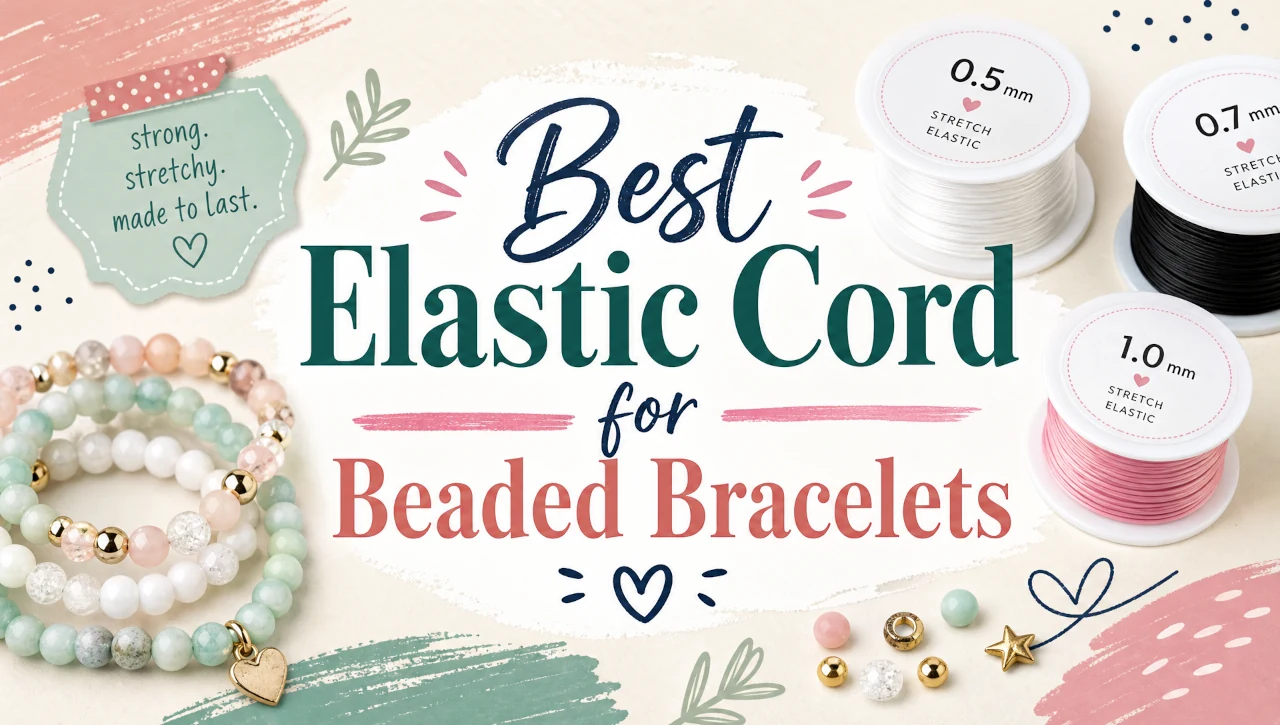
Why Elastic Cord Matters in Bracelet Making
If you love making stretch bracelets, choosing the right elastic cord is one of the most important decisions you can make. You can use beautiful beads, choose a perfect color palette, and create a stylish design, but if the elastic cord is weak, too thin, too thick, or tied incorrectly, the bracelet may break, stretch out, or feel uncomfortable to wear.
Elastic cord is the foundation of many beginner-friendly bracelet making projects. It is flexible, easy to use, affordable, and does not require a clasp. That makes it ideal for beginners, kids’ crafts, craft fairs, handmade gifts, and small DIY jewelry businesses. With elastic cord, you can make gemstone bracelets, clay bead bracelets, seed bead bracelets, pearl bracelets, name bracelets, friendship bracelets, stackable bracelets, and simple everyday accessories.
However, not all elastic cord is the same. Some types are better for heavy gemstone beads. Some are better for tiny seed beads. Some stretch easily but fray over time. Some hold knots well, while others need glue or a special finishing method. Understanding the differences can help you make stronger, longer-lasting bracelets.
This ultimate guide will explain how to choose the best elastic cord for beaded bracelets, what sizes work best with different beads, how to tie elastic cord securely, and how to avoid the most common beginner mistakes. Whether you are new to DIY jewelry or improving your bracelet making skills, this guide will help you create stretch bracelets that look polished and hold up better with regular wear.
What Is Elastic Cord for Beaded Bracelets?
Elastic cord is a stretchy stringing material used to make bracelets that slide over the hand without a clasp. It is commonly used in beaded bracelet making because it is simple, flexible, and comfortable.
A typical stretch bracelet is made by stringing beads onto elastic cord, tying the cord into a secure knot, adding a small amount of jewelry glue, and hiding the knot inside a bead if possible. The finished bracelet stretches when worn and returns to shape around the wrist.
Elastic cord is especially popular for:
- Gemstone bead bracelets
- Crystal bead bracelets
- Clay bead bracelets
- Pearl bead bracelets
- Seed bead bracelets
- Letter bead bracelets
- Kids’ bracelets
- Stackable bracelets
- Friendship bracelets
- Stretch anklets
- Handmade jewelry gifts
For beginners, elastic cord is one of the easiest materials to learn because it does not require crimp beads, clasps, jump rings, or advanced wire techniques. Still, the right cord makes a major difference in durability.
Why Use Elastic Cord for DIY Jewelry?
Elastic cord is a favorite in DIY jewelry because it makes bracelet making fast and approachable. Instead of measuring chain, attaching clasps, or using multiple findings, you can create a wearable bracelet with just beads, elastic, scissors, and glue.
Elastic cord is useful because it is:
- Beginner-friendly
- Comfortable to wear
- Affordable
- Easy to customize
- Great for quick projects
- Suitable for many bead styles
- Lightweight and flexible
- Good for stretch bracelet stacks
- Easy to size for different wrists
Stretch bracelets are also popular with customers because they are easy to put on and take off. This is especially helpful for people who have difficulty using small clasps.
Elastic cord also makes DIY jewelry more accessible. You can create a bracelet in minutes, experiment with patterns, and remake designs easily if you want to change the color or layout.
The Best Elastic Cord for Beaded Bracelets: What to Look For
The best elastic cord for beaded bracelets depends on the beads you are using, the bracelet style, and how durable you need the finished piece to be. Before buying elastic cord, consider these important qualities.
1. Strength
Strength matters because beads can be heavy. Gemstone beads, glass beads, and metal beads put more pressure on elastic than lightweight acrylic or clay beads. A weak cord may snap when stretched or worn often.
For heavier beads, choose a thicker elastic cord when the bead holes allow it. If the bead hole is too small for thick cord, use the strongest cord that fits comfortably through the beads.
2. Stretch Recovery
Good elastic cord should stretch and return to its original shape. If the cord stretches out and stays loose, the bracelet will become saggy and uncomfortable.
High-quality elastic cord should have strong stretch recovery, especially for bracelets that will be worn often.
3. Knot Security
Some elastic cords hold knots better than others. A cord that is slippery may require a surgeon’s knot, extra half knots, and jewelry glue. A cord that grips itself well is usually easier for beginners.
Even with good cord, knotting technique matters. Many bracelet failures happen because the knot was not tied securely.
4. Bead Hole Compatibility
The elastic cord must fit through the bead holes. This sounds obvious, but it is one of the most common bracelet making problems.
Some gemstone beads have small holes. Some pearls have very narrow drill holes. Some seed beads require thin elastic. If your cord is too thick, it may not pass through the beads or may be impossible to knot neatly.
5. Color and Visibility
Elastic cord is usually clear, white, black, or colored. Clear elastic is popular because it works with many bead colors. Black elastic can look better with dark beads. White elastic is useful for light beads, pearls, and pastel designs.
If you are using transparent glass beads or crystal beads, the cord color may show through. Choose a cord color that supports the design.
6. Durability Over Time
Elastic cord can weaken from moisture, oils, perfume, heat, sunlight, and constant stretching. Better-quality elastic usually lasts longer. Still, no stretch bracelet is indestructible. Proper care and construction are important.
Common Types of Elastic Cord for Bracelet Making
There are several types of elastic cord used in DIY jewelry. Each one has strengths and weaknesses.
Stretch Magic-Style Clear Elastic Cord
Clear elastic cord is one of the most popular options for beginner bracelet making. It is smooth, stretchy, and widely available in craft stores and online bead shops.
It works well for:
- Gemstone beads
- Glass beads
- Acrylic beads
- Clay beads
- Letter beads
- Pearl-style beads
- Simple stretch bracelets
Clear elastic is useful because it disappears into many designs. It is especially good for beginners making basic beaded bracelets.
Pros:
- Easy to find
- Simple to use
- Good for many beads
- Clear color blends with most designs
- Available in several sizes
Cons:
- Can be slippery when tying knots
- May need glue for extra security
- Can stretch out if poor quality
- May show through transparent beads
Fabric-Covered Elastic Cord
Fabric-covered elastic cord has an elastic center wrapped in a thread-like outer layer. It is softer and may grip knots better than smooth clear elastic.
It works well for:
- Pony beads
- Large-hole beads
- Kids’ bracelets
- Casual bracelets
- Handmade friendship jewelry
Pros:
- Good knot grip
- Softer feel
- Available in many colors
- Good for larger bead holes
Cons:
- Can fray
- May be too thick for gemstone beads
- Not always as polished-looking
- Fabric color may show between beads
Elastic Beading Thread
Elastic beading thread is thinner than standard elastic cord. It is often used for small beads, seed beads, and delicate designs.
It works well for:
- Seed beads
- Small glass beads
- Lightweight bracelets
- Dainty designs
- Multi-strand bracelets
Pros:
- Fits through small bead holes
- Good for tiny beads
- Flexible and lightweight
- Useful for delicate DIY jewelry
Cons:
- Not ideal for heavy beads
- Can be harder to knot securely
- May break more easily if overloaded
Silicone Elastic Cord
Silicone elastic cord is flexible, smooth, and often used for stretch jewelry. It can be clear or translucent and works with many bead styles.
It works well for:
- Glass beads
- Gemstone beads
- Crystal beads
- Smooth round beads
- Stretch bracelets
Pros:
- Smooth and flexible
- Good stretch
- Clear appearance
- Comfortable to wear
Cons:
- Can be slippery
- Needs careful knotting
- Quality varies between brands
Polyester Elastic Cord
Polyester elastic cord is often stronger and more abrasion-resistant than some basic craft elastics. It may be used for bracelets that need better durability, depending on the construction.
It works well for:
- Larger beads
- Casual bracelets
- Adjustable bracelet styles
- Designs where cord color is part of the look
Pros:
- Durable
- Available in colors
- Good for visible cord designs
Cons:
- May not fit small bead holes
- Less invisible than clear elastic
- Not always ideal for polished gemstone bracelets
Best Elastic Cord Sizes for Beaded Bracelets
Elastic cord size is usually measured in millimeters. The most common sizes for bracelet making are 0.5mm, 0.7mm, 0.8mm, 1.0mm, and sometimes 1.2mm.
Choosing the right size depends on bead hole size, bead weight, and design style.
0.5mm Elastic Cord
0.5mm elastic cord is thin and flexible. It is best for smaller beads with narrow holes.
Best for:
- Seed beads
- Small glass beads
- Tiny crystal beads
- 4mm gemstone beads
- Lightweight bracelets
Because 0.5mm cord is thinner, it is not the best choice for heavy gemstone bracelets unless the beads are very small and lightweight. It may also require careful knotting.
0.7mm Elastic Cord
0.7mm elastic cord is a popular all-purpose size for many beginner projects. It is thin enough to fit through many bead holes but stronger than 0.5mm cord.
Best for:
- 6mm beads
- Lightweight 8mm beads
- Clay beads
- Acrylic beads
- Letter beads
- Small gemstone beads
This is a good size for beginners who want one versatile elastic cord for DIY jewelry projects.
0.8mm Elastic Cord
0.8mm elastic cord is one of the best choices for classic stretch bracelets. It works well with many 8mm gemstone beads, glass beads, and crystal beads.
Best for:
- 8mm gemstone beads
- 8mm glass beads
- 6mm beads with larger holes
- Pearl beads
- Stackable bracelets
- Everyday stretch bracelets
For many bracelet making projects, 0.8mm is a strong and practical choice.
1.0mm Elastic Cord
1.0mm elastic cord is thicker and stronger, making it useful for larger or heavier beads. However, it will not fit through all bead holes.
Best for:
- 10mm beads
- 12mm beads
- Large-hole gemstone beads
- Wooden beads
- Pony beads
- Chunky bracelet designs
If your bead holes are large enough, 1.0mm cord can make a sturdy bracelet. It may create a larger knot, so hiding the knot can be more difficult.
1.2mm Elastic Cord
1.2mm elastic cord is very thick for most jewelry beads. It is usually used for large-hole beads, craft beads, or chunky designs.
Best for:
- Large wooden beads
- Large acrylic beads
- Pony beads
- Kids’ crafts
- Statement bracelets
This size is usually not necessary for standard gemstone bracelet making.
Elastic Cord Size Chart for Bracelet Making
Use this quick guide when choosing elastic cord for beads:
| Bead Type | Common Bead Size | Recommended Elastic Cord |
|---|---|---|
| Seed beads | 2mm-4mm | 0.5mm or thinner |
| Small glass beads | 4mm-6mm | 0.5mm-0.7mm |
| Clay beads | 6mm | 0.7mm-0.8mm |
| Letter beads | 6mm-7mm | 0.7mm-0.8mm |
| Gemstone beads | 6mm | 0.7mm |
| Gemstone beads | 8mm | 0.8mm |
| Gemstone beads | 10mm | 0.8mm-1.0mm |
| Pearl beads | 6mm-8mm | 0.7mm-0.8mm |
| Wooden beads | 8mm-12mm | 0.8mm-1.0mm |
| Pony beads | 9mm | 1.0mm-1.2mm |
Always test before making the final bracelet. Bead hole sizes vary by manufacturer and material.
Best Elastic Cord for Different Bead Types
Different beads behave differently on elastic cord. Heavy beads need strength. Small beads need thin cord. Transparent beads may need clear cord.
Best Elastic Cord for Gemstone Beads
Gemstone beads are heavier than acrylic, clay, or seed beads. For most gemstone bracelet making, 0.7mm or 0.8mm clear elastic cord is a good starting point.
Use:
- 0.7mm for 6mm gemstone beads
- 0.8mm for 8mm gemstone beads
- 0.8mm to 1.0mm for 10mm gemstone beads, if the holes allow it
Because gemstone beads can have rough or uneven holes, choose a durable elastic cord and check beads for sharp edges. A rough bead hole can weaken elastic over time.
Best Elastic Cord for Clay Beads
Clay beads, especially flat heishi-style beads, are lightweight and trendy. They usually work well with 0.7mm or 0.8mm elastic cord.
Use:
- 0.7mm for most flat clay bead bracelets
- 0.8mm if the holes are large enough and you want extra strength
Clay bead bracelets often include letter beads, smiley beads, charms, and gold spacer beads. Make sure all bead holes fit the same cord.
Best Elastic Cord for Seed Beads
Seed beads are tiny and usually need thin elastic. Use 0.5mm elastic cord or elastic beading thread.
Use:
- 0.5mm for larger seed beads such as 6/0 or 8/0
- Thinner elastic thread for smaller seed beads
Seed bead bracelets can be delicate, so they are best for lightweight designs rather than heavy stretch bracelets.
Best Elastic Cord for Pearl Beads
Pearl beads can have smaller holes than other beads, especially freshwater pearls. For faux pearls or glass pearl beads, 0.7mm or 0.8mm may work. For real freshwater pearls, you may need thinner elastic or a different stringing method.
Use:
- 0.5mm to 0.7mm for freshwater pearls
- 0.7mm to 0.8mm for faux pearl beads
- Clear or white cord for a clean look
Pearl bracelets often look more polished when the knot is hidden carefully.
Best Elastic Cord for Glass Beads
Glass beads vary widely in weight and hole size. Small glass beads may need 0.5mm to 0.7mm cord, while larger glass beads may work with 0.8mm cord.
Use:
- 0.5mm to 0.7mm for small glass beads
- 0.8mm for larger glass beads
- Clear cord for transparent beads
If the beads are transparent, check how the cord looks inside the bead before finishing the bracelet.
Best Elastic Cord for Wooden Beads
Wooden beads are usually lightweight and often have larger holes. You can use 0.8mm, 1.0mm, or fabric-covered elastic cord.
Use:
- 0.8mm for smaller wooden beads
- 1.0mm for larger wooden beads
- Colored fabric elastic for casual or natural designs
Wooden bead bracelets can also work well with visible cord styles.
Best Elastic Cord for Letter Beads
Letter beads are common in personalized bracelet making. Most acrylic letter beads work with 0.7mm or 0.8mm elastic cord.
Use:
- 0.7mm for small letter beads
- 0.8mm for standard acrylic letter beads
- Clear, white, or colored cord depending on the design
When making name bracelets, check the fit after adding letters because block letter beads can change how the bracelet sits.
Clear Elastic Cord vs. Colored Elastic Cord
Clear elastic cord is the most common choice because it blends into many bracelet designs. It is ideal when you want the beads to be the focus.
Use clear elastic cord for:
- Gemstone bracelets
- Crystal bracelets
- Glass bead bracelets
- Pearl-style bracelets
- Minimalist bracelets
- Designs with mixed bead colors
Colored elastic cord can be useful when the cord is visible or part of the design. For example, black cord can look better with black onyx, lava stone, hematite, or dark wooden beads. White cord can work well with pearls, white clay beads, and pastel designs.
Use colored elastic cord for:
- Large-hole beads
- Kids’ bracelets
- Friendship bracelets
- Casual designs
- Black bead bracelets
- White pearl bracelets
- Bright clay bead bracelets
If the cord may show between beads, choose a color that looks intentional.
How Much Elastic Cord Do You Need for a Bracelet?
For one average adult stretch bracelet, cut about 10 to 12 inches of elastic cord. This gives you enough length to string the beads comfortably and tie a secure knot.
The finished bracelet length is usually around 6.5 to 7.5 inches for many adults, but the working cord should be longer than the final size.
Suggested working lengths:
- Child bracelet: cut 8 to 10 inches
- Small adult bracelet: cut 10 inches
- Average adult bracelet: cut 10 to 12 inches
- Large adult bracelet: cut 12 to 14 inches
- Anklet: cut 12 to 16 inches
It is better to cut a little extra than to struggle with a cord that is too short to knot.
How to Choose Elastic Cord for Bracelet Making
When choosing elastic cord, use this step-by-step process.
Step 1: Choose Your Beads First
Start with the beads. The bead material, size, weight, and hole size will determine the best cord.
Ask:
- Are the beads heavy or lightweight?
- Are the bead holes small or large?
- Are the beads transparent?
- Are the bead holes smooth or rough?
- Will the cord be visible?
Step 2: Test the Cord Through the Beads
Before stringing the full bracelet, test your elastic cord through several beads. Make sure it slides easily without forcing.
If you have to pull too hard, the cord may fray or weaken. If the cord is too loose inside the bead hole, it may still work, but the bracelet may feel less structured.
Step 3: Consider the Bracelet Weight
Heavy beads need stronger cord. A bracelet made with 10mm gemstone beads puts more stress on elastic than a bracelet made with lightweight clay beads.
Use the thickest cord that comfortably fits through the beads and allows a secure knot.
Step 4: Think About the Knot
A thicker cord creates a larger knot. If the knot is too large to hide inside a bead, you may need to place it inside a large-hole bead, spacer bead, or crimp cover.
Step 5: Make a Test Bracelet
If you plan to sell DIY jewelry, make and wear a test bracelet before listing the design. Stretch it gently, wear it for a few days, and check the knot. This helps you catch problems before customers do.
How to Tie Elastic Cord for Beaded Bracelets
A bracelet is only as strong as the knot. Even the best elastic cord can fail if the knot is weak.
Best Knot for Elastic Bracelets
A surgeon’s knot is one of the most common knots for elastic bracelet making. It is similar to a square knot, but with an extra wrap that helps grip the cord.
Basic Knotting Method
- String your beads onto the elastic cord.
- Check the bracelet size.
- Cross the two cord ends.
- Tie the first half of a knot, wrapping one end around the other twice.
- Pull the knot snug, but do not overstretch the cord.
- Tie another half knot in the opposite direction.
- Add one or two extra half knots if needed.
- Place a tiny drop of jewelry glue on the knot.
- Let the glue dry fully.
- Trim the cord ends carefully.
- Hide the knot inside a bead if possible.
Do not use too much glue. A large blob of glue can become stiff, messy, and visible.
Should You Glue Elastic Bracelet Knots?
Yes, many jewelry makers use a small amount of glue on elastic bracelet knots for extra security. The key is using the right amount and the right glue.
Good options include:
- Flexible jewelry glue
- Bead-specific adhesive
- Clear-drying craft jewelry glue
Avoid glues that become brittle, cloudy, or bulky. Some super glues can make elastic stiff and more likely to crack over time. Always test glue with your specific elastic cord.
Apply glue carefully with a toothpick or fine applicator. Let it dry completely before wearing the bracelet.
How to Hide the Knot in a Stretch Bracelet
A hidden knot makes a bracelet look more professional. After tying and gluing the knot, slide it into a nearby bead with a hole large enough to hold it.
Ways to hide the knot include:
- Slide the knot inside a gemstone bead
- Use a large-hole spacer bead
- Use a metal crimp cover
- Place the knot beside a charm or focal bead
- Use a bead with a slightly larger drill hole
Do not force the knot into a bead. If the hole is too small, forcing it can weaken the elastic or crack the bead.
Should You Pre-Stretch Elastic Cord?
Yes, pre-stretching elastic cord can help reduce sagging after the bracelet is worn. Before stringing your beads, gently pull the elastic cord a few times along its length. Do not yank it aggressively.
Pre-stretching helps the bracelet keep its shape and prevents it from becoming too loose after a few wears.
This is especially helpful for:
- Gemstone bracelets
- Heavy bead bracelets
- Bracelets for sale
- Bracelets that will be worn often
Common Mistakes When Using Elastic Cord
Many beginner bracelet making problems come from small mistakes. Here are the most common ones to avoid.
Using Cord That Is Too Thin
Thin cord may fit easily through beads, but it may not be strong enough for heavy designs. Use the thickest cord that works with your beads.
Using Cord That Is Too Thick
Thick cord can be difficult to string, knot, and hide. If you have to force it through the beads, choose a thinner size.
Skipping the Pre-Stretch
Elastic can relax after wear. Pre-stretching helps prevent the bracelet from becoming loose.
Making the Bracelet Too Tight
A tight bracelet puts extra stress on the elastic every time it is worn. Leave enough room for comfort and movement.
Tying a Weak Knot
A simple single knot is usually not enough. Use a surgeon’s knot or multiple secure knots.
Using Too Much Glue
Too much glue can look messy and stiffen the cord. Use a tiny amount.
Cutting the Ends Too Soon
Let the glue dry before trimming the elastic ends. Cutting too soon can loosen the knot.
Not Testing the Bracelet
If you are making bracelets to sell, test your design before offering it to customers.
Best Elastic Cord for Selling Beaded Bracelets Online
If you are selling handmade stretch bracelets online, durability matters. Customers expect bracelets to arrive intact, fit comfortably, and last with normal wear.
For selling DIY jewelry, choose elastic cord that is:
- Strong enough for your bead weight
- Consistent in quality
- Easy to knot securely
- Compatible with your bead holes
- Comfortable on the wrist
- Reliable after stretch testing
For most online bracelet making businesses, 0.8mm clear elastic cord is a useful standard for 8mm gemstone beads and many everyday bracelets. Keep 0.7mm cord on hand for smaller beads and 1.0mm cord for larger beads with bigger holes.
Before selling a bracelet design, wear-test it. Make one sample, stretch it gently, wear it for several days, and check the knot and cord. If it loosens, frays, or feels weak, adjust the cord size or knotting method.
How to Care for Elastic Beaded Bracelets
Even the best elastic cord will last longer with proper care. Include care instructions with handmade bracelets, especially if you sell them.
Basic care tips:
- Roll the bracelet on and off instead of pulling hard.
- Keep bracelets away from water when possible.
- Avoid wearing them in the shower or pool.
- Keep away from perfume, lotion, and oils.
- Store bracelets away from direct sunlight.
- Do not sleep in stretch bracelets if they feel tight.
- Avoid overstretching the bracelet.
- Remove bracelets before heavy exercise or rough activity.
Good care helps protect the elastic and the beads.
Bracelet Making Supplies to Use with Elastic Cord
Elastic cord is only one part of a good stretch bracelet. You may also want these supplies:
- Beads
- Spacer beads
- Charms
- Letter beads
- Bead mat
- Bead stopper
- Scissors
- Jewelry glue
- Measuring tape
- Bead board
- Crimp covers
- Organizers
- Small pliers for charms
A bead mat keeps beads from rolling away. A bead stopper keeps your pattern secure while stringing. A bead board helps plan bracelet size and layout. These simple tools make DIY jewelry projects easier and cleaner.
Beginner Stretch Bracelet Project
Here is a simple beginner project using elastic cord.
Supplies
- 8mm gemstone beads
- 0.8mm clear elastic cord
- One metal spacer bead
- Scissors
- Jewelry glue
- Measuring tape
- Bead stopper
Instructions
- Measure your wrist and add about 0.5 inches.
- Cut 10 to 12 inches of elastic cord.
- Gently pre-stretch the cord.
- Add a bead stopper or tape to one end.
- String the gemstone beads onto the cord.
- Add one metal spacer bead near the center or near the knot area.
- Wrap the bracelet around your wrist to check the fit.
- Tie a surgeon’s knot.
- Add a tiny drop of jewelry glue.
- Let the glue dry completely.
- Trim the extra elastic.
- Slide the knot into the spacer bead or nearby gemstone bead.
This simple project is a great way to practice bracelet making with beads before moving on to more complex DIY jewelry designs.
Elastic Cord Troubleshooting Guide
Why did my stretch bracelet break?
A stretch bracelet may break because the elastic cord was too thin, the beads were too heavy, the bead holes were sharp, the bracelet was too tight, or the knot was weak. Check your materials and construction method before making another bracelet.
Why did my bracelet stretch out?
The elastic may not have been pre-stretched, or the cord may be low quality. Heavy beads can also stretch cord over time. Use stronger elastic and pre-stretch before stringing.
Why does my knot keep coming undone?
The cord may be slippery, the knot may not be secure enough, or the glue may not be compatible. Try a surgeon’s knot, add an extra half knot, and use a flexible jewelry glue.
Why will my elastic not fit through the beads?
The bead holes are too small for the cord. Choose thinner elastic or beads with larger holes. Do not force the cord through, because this can damage the elastic.
Why can I see the elastic between beads?
The bracelet may be too loose, the beads may be irregular, or the cord color may not match. Try adjusting the size, using more beads, or choosing a better cord color.
SEO Tips for Selling Stretch Bracelets Online
If you make beaded bracelets to sell online, SEO can help shoppers find your products. Use clear keywords in your titles, descriptions, image alt text, and tags.
Helpful product keywords include:
- beaded bracelet
- stretch bracelet
- gemstone bracelet
- handmade bracelet
- crystal bead bracelet
- elastic bracelet
- DIY jewelry
- bracelet making
- beads bracelet
- stackable bracelet
- personalized bracelet
- name bracelet
- clay bead bracelet
A good product title might be:
Rose Quartz Beaded Bracelet, Handmade Stretch Bracelet, Crystal Bead DIY Jewelry Gift
A helpful product description should include:
- Bead material
- Bead size
- Bracelet size
- Cord type
- Color
- Style
- Gift occasion
- Care instructions
- Customization options
Avoid vague descriptions. Customers want to know exactly what they are buying.
Frequently Asked Questions About Elastic Cord for Beaded Bracelets
What is the best elastic cord for beaded bracelets?
The best elastic cord depends on your beads. For many beginner bracelet making projects, 0.8mm clear elastic cord is a good choice for 8mm gemstone beads, glass beads, and crystal beads. Use 0.7mm cord for smaller beads and 1.0mm cord for larger beads with bigger holes.
What size elastic cord should I use for 8mm beads?
For most 8mm beads, 0.8mm elastic cord works well. If the bead holes are small, use 0.7mm. If the holes are large and the beads are heavy, 1.0mm may work better.
What size elastic cord should I use for seed beads?
Seed beads usually need thin elastic cord or elastic beading thread. For larger seed beads, 0.5mm elastic may work. For smaller seed beads, use thinner elastic thread designed for bead weaving or delicate bracelet making.
Is clear elastic cord better than fabric elastic?
Clear elastic cord is usually better for polished gemstone, glass, crystal, and pearl-style bracelets because it blends into the design. Fabric elastic can be useful for large-hole beads, kids’ bracelets, and casual DIY jewelry projects.
Should I use glue on elastic bracelet knots?
Yes, a small amount of flexible jewelry glue can help secure elastic bracelet knots. Use only a tiny drop and let it dry completely before trimming the cord.
What knot is best for elastic bracelets?
A surgeon’s knot is one of the best knots for elastic bracelets. It grips better than a simple single knot and works well for many stretch bracelet making projects.
How do I keep elastic bracelets from breaking?
Use the correct cord size, pre-stretch the elastic, avoid making the bracelet too tight, tie a secure knot, use a small amount of jewelry glue, and check beads for sharp holes. Teach customers to roll bracelets on and off instead of pulling hard.
Can I use fishing line for stretch bracelets?
Fishing line is not elastic, so it is not ideal for stretch bracelets. Use elastic cord if you want the bracelet to stretch over the hand. Fishing line or beading wire may work for bracelets with clasps, but not for standard stretch bracelets.
How long do elastic beaded bracelets last?
The lifespan depends on cord quality, bead weight, construction, and care. A well-made bracelet with quality elastic can last a long time with gentle use, but elastic can eventually weaken from stretching, moisture, heat, sunlight, and chemicals.
What elastic cord should I use for gemstone bracelets?
For gemstone bracelets, use strong clear elastic cord. A 0.7mm cord usually works for 6mm gemstone beads, 0.8mm works for many 8mm gemstone beads, and 1.0mm may work for larger beads if the holes are big enough.
Final Thoughts: Choose the Best Elastic Cord for Stronger Beaded Bracelets
Elastic cord may seem like a small detail, but it plays a major role in the quality of your beaded bracelets. The best beads and the prettiest design will not matter if the bracelet stretches out, breaks, or comes untied after a few wears.
For most beginner DIY jewelry projects, start with 0.7mm and 0.8mm clear elastic cord. These sizes work with many popular beads and are practical for gemstone bracelets, clay bead bracelets, letter bracelets, glass bead bracelets, and simple stretch designs. Add 0.5mm cord for seed beads and delicate projects, and keep 1.0mm cord for larger beads when the holes allow it.
Good bracelet making is about matching the cord to the beads. Consider bead weight, bead hole size, bracelet style, and how the finished piece will be worn. Pre-stretch your elastic, tie a secure surgeon’s knot, use a tiny amount of jewelry glue, and hide the knot neatly for a polished result.
Whether you are making bracelets for yourself, gifts, craft fairs, or an online DIY jewelry shop, choosing the right elastic cord will help your designs look better and last longer. With the right materials and a little practice, simple beads and elastic cord can become beautiful handmade bracelets that are comfortable, durable, and ready to wear.